
WHO DO YOU LOVE?
AND HOW DO YOU LOVE?
THE FIVE FIRST SATURDAYS IS A DEVOTION NEEDED NOW MORE THAN EVER! FIND OUT MORE HERE
THE SAINT MICHAEL PRAYER AND THE ROSARY
ARE ALSO POWERFUL PRAYERS TO HELP US THROUGH THESE VERY TURBULENT TIMES!
HIGHLY RECOMMENDED! DELIVERANCE PRAYERS,
A BOOK FROM SENSUS TRADITIONIS PRESS
(A GREAT PUBLISHER HELPING US FIGHT OUR MANY SPIRITUAL BATTLES NOWADAYS)!
CHECK OUT OUR PODCAST PAGE AND OUR YOUTUBE CHANNEL FOR INSPIRING CONTENT
BISHOP STRICKLAND HAS SUGGESTED A POWERFUL REMEDY IN REPARATION FOR SO MANY EVILS TODAY THAT CAN ALSO HELP YOU ADVANCE IN HOLINESS! THERE'S MORE INFORMATION HERE

Who do you love, and how do you love? Our Lord might very well ask you when you pass away not just who you loved but how you loved them. Did you bear grudges or were you forgiving? Did selfishness blind you to the needs of others?
It's so easy to see love as transactional, (what can I get) as opposed to being transcendent, (what can l give without counting the cost). Strive to love as Jesus loves. Ask Him for the grace to open your heart with the fire of His love when it’s growing cold. And keep in mind these great words from Saint John of the Cross "In the evening of life, we shall be judged on our love."
Admittedly, so many people feel loneliness and alienation in a world of social media that is becoming more and more polarized, where so much communication is done on screens, with people texting each other rather than talking to each other!
And Artificial Intelligence chatbots have become popular enough that many of us are treating them like some kind of digital best friend just to fight loneliness. Yet the machines they run on, smartphones, laptops and tables weren't meant to be our buddies!
While they can be helpful in myriad ways in helping us with tasks and information, they're not meant to substitute for the companionship, friendship and love we can have, and that God ardently desires that we can share, with our fellow human beings.
But when people allow technology to feed our proclivity for self-centeredness (such as in the world of Instagram influencers and selfies) it becomes that much harder to love and care for each other as Jesus would have us do, as mentioned earlier.
Now, it's one thing to talk to somebody, perhaps in a Zoom chat, or some other online meeting platform, but the idea that ChatGPT or Claude, or whatever, is going to become your new best friend is probably sadly mistaken. We need human contact and were meant for it!
What did God say when he created Eve, after having created Adam? "It is not good for man to be alone" (Gen 2:18). This applied after the Fall of our first parents in the Garden of Eden as well!
The problem is, of course, what kind of human contact do we need? That is also where God can help because he can give you the strength, and the wisdom, through his Spirit, to be the kind of person who radiates his love, and encourages other people to do the same; and be less likely to fall into the traps of arrogance and jealousy towards others and the backbiting, hostility, unforgiveness, and even hatred, that so often plague us these days!
The Greeks have more than one word for what we all aspire to and crave. In many ways that makes things easier, more precise. How many of our pop songs (besides having to depend on hackneyed rhymes about “above”, “dove”, and “dreaming of”) have eros (romantic or sexual love) and agape (“Unconditional, selfless, and universal love or charity, which later became central to Christian theology”) intertwined like the weeds and the wheat growing side by side in Matthew’s Gospel 13:24-30?
And what’s more, how often is love not only transactional (what’s in it for me as the primary focal point), but for many of us love is transitional as well! How many wedding vows, particularly among celebrities and otherwise prominent people, might as well read “Till death do us part, or someone better comes along.” The contingent nature of such relationships doesn’t provide one or both of the people involved with any sense of long term stability.
According to the figures cited in the South Denver Therapy’s detailed webpage on statistics on marriage and divorce from January, 2026, while the divorce rate of 2.4 per 1,000 people is the lowest since the early 1970s, approximately 41% of first marriages end in divorce. Second marriages have a 60% divorce rate, and third marriages have a 73% divorce rate.
Transitional love is contingent on the circumstances in which that supposedly loving relationship has been established. Was it a loving relationship to begin with? Or is it just a matter of one or both parties just not wanting to be alone, which understandably can be a pretty strong motivation.
The desire for love and marriage, to find a spouse that will have the emotional and logistical (financial) means to help the other person to raise a family, is perfectly natural. But if one is looking for love for all the wrong reasons, superficially, for someone attractive or someone with status and wealth, that relationship might very well have a foundation of sand rather than solid rock.
In other words, your focus shouldn’t be on what they can do for you rather than what you can do for them. In a truly loving relationship the love flows both ways in a mutually beneficial union. In the prayer requests section of our website ourcatholicprayers.com it pains me to post frequent requests from a woman who just wants her husband and his family to show her some love, which, apparently, they never do!
It’s ironic in a way how often St. Paul’s spot-on diagnosis of what love consists of in the well-known passage from his first letter to the Corinthians 13:4-8, while often read at weddings, can often be ignored when the matrimonial glow of that ceremony, and its immediate aftermath, fade with time.
He wrote “Love is patient and kind; love is not jealous or boastful; it is not arrogant or rude. Love does not insist on its own way; it is not irritable or resentful; it does not rejoice at wrong, but rejoices in the right. Love bears all things, believes all things, hopes all things, endures all things. Love never ends” (1 Cor 13:4-8).
Would we all could keep St. Paul’s words on love (originally called “charity” in the Douay-Rheims Bible) in mind, and not just married couples, but families in general! They are as challenging as they are rewarding to those who would take them to heart!
In encapsulating the essence of agape (unconditional) love, wanting only the best for others, St. Paul also touches on the crucial impediments to such love. Envy causes much heartache and frustration in families, businesses and other communities alike!
So does the arrogance that often accompanies it! And with that, unforgiveness and the constant desire among so many to “get even” with someone they feel has wronged them in some way. Think of all the emotional wounds in families and communities unforgiveness causes,
Think also of parish communities, other social organizations and of course families where gossip and backbiting prevail from those rejoicing in someone’s wrongdoing, whether it’s real or imaginary! Love cannot take root where everybody is always looking to get even with somebody, or being otherwise unforgiving. That's why forgiveness is so important.
We ask God our Father in the Lord’s Prayer to “Forgive us our trespasses as we forgive those who trespass against us” (Matt 6:12). Jesus adds a vital corollary to those words when he tells his listeners in the Sermon on the Mount that if they don’t forgive others their offenses neither will their heavenly Father forgive them their own!
It is fitting that the word “love” in St. Paul's letter to the Corinthians mentioned earlier was originally written as “charity”, given that it has been said that charity is love transformed by God’s grace for us to love Him for his own sake and for us to love our neighbor in God.
The footnotes in the Ignatius Study Bible further drive that point home when the authors write that, although they use the word ‘love” instead of charity in the quotation given above “because love (charity) is a virtue that is supernatural and God-given, it cannot be reduced to a feeling or emotion that comes and goes over time.”
God gave us the blueprint for how we are to love in these famous verses from the books of Deuteronomy and Leviticus that are referenced in the Gospels as well: “You shall love the Lord your God with all your heart, with all your soul and with all your strength” (Dt 6:5) “and your neighbor as yourself” (Lv 19:18). Jesus Himself quotes these scripture passages in Matthew’s Gospel (22:37, 39), and Mark’s Gospel (12:29-31). A lawyer also quotes them in Luke’s Gospel (10:27).
Jesus further adds in Matt 22:40 that the law and the prophets covered in the Old Testament depend on these two commandments, which also make a good summary of the Ten Commandments themselves in many ways!
The commandment from Deuteronomy sums up commandments one through three in the Decalogue (as the Ten Commandments are also known) and the commandment from Leviticus sums up the remaining seven, with both wonderfully summarizing the moral law of love of God and love of neighbor.
We get another inspiring look at both the intensity and sincerity of Jesus’ love for us from some other scripture passages. In the Last Supper discourse, Jesus told the apostles, and by extension all of us as well, the night before HIs crucifixion with His Passion only a few hours away, this stirring summary of our His foundational Gospel message, “This is my commandment, that you love one another as I have loved you” (John 15:10).
Our Lord went on to tell them that “Greater love than this no man has, that a man lay down his life for his friends. You are my friends if you do what I command you” (John 15:13-14).
Years later, St. Paul would sum up just how special God’s love is for us when he wrote in his letter to the Romans that “For why did Christ, when as yet we were weak, according to the time, die for the ungodly? For scarcely on behalf of a just man does one die; yet perhaps one might bring himself to die for a good man. But God commends his charity towards us; because when as yet we were sinners, Christ died for us” (Rom 5: 6-9).
While Christ’s Passion, Death and Resurrection restored a right relationship with God lost after humanity's fall from Grace from Adam and Eve’s disobedience in the garden of Eden, we still have to battle our sinful tendencies.
Living a sacramental life of prayer, frequent reception of Communion and Confession, and reading scripture and writings of the saints can help us maintain and keep sanctifying grace in our souls, essential for salvation for our entry into heaven when we pass away.
(And, of course, Christ gave us the Sacrament of Penance, Confession, to restore that grace when we’ve lost it, hopefully only temporarily when we’ve committed a mortal sin.)
It’s easy while looking at Christ’s extraordinary love for all of us to think “I can’t possibly love others as He did. It’s too high of a bar.” Good news! Our Lord well understands our sinful proclivities. That’s why He gave us the sacraments so that we can stay close to Him and emulate His exemplary example of love and holiness as best we can!
We are, after all, sinners to be sure, but we can be “citizens in training” and “saints in training” with the goal of sharing eternal life with God in heaven should we choose to follow Him here on earth!. And the more we seek to live as God would have us pursuing lives of virtue and resisting sin, the more the path to our salvation can be on a firm footing.
In any case, keep striving, and ask our Lord for His help. If nothing else, try as much as you can, and as often as possible, to follow Him in His exemplary righteousness. Allow Christ to permeate your soul so that you may radiate His love.
FROM OUR BOOK AND GIFT STORE
OR CAFE PRESS STORE!
Return from Who Do You Love and How Do You Love
to Prayer Blog Page


Recent Articles


-
Why We Fight: Spiritual Warfare (Part 1)
Oct 08, 26 08:05 PM
 Don't you know there's a war on? A World War II saying for sacrifice rings true today when we’re in a major Spiritual War for the salvation of souls!
-
A Novena to Saint Michael: For his powerful intercession and aid
Sep 18, 26 04:39 PM
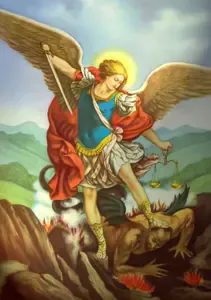 Are you at your wit's end with all the turmoil around us these days? Pray to St. Michael in this novena for his help!
-
Prayers to Our Lady as the Queen of Martyrs
Sep 13, 26 06:31 PM
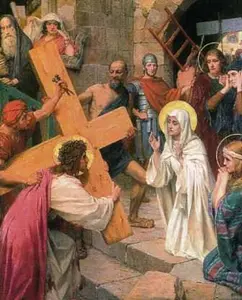 St. Alphonsus Liguori once wrote that Our Lady suffered a martyrdom in her soul at the foot of the cross in her Divine Son’s Crucifixion at Calvary.
-
Who do you love, and how do you love? Jesus’ question for all of us!
Sep 03, 26 12:00 PM
 Our Lord might very well ask you when you pass away not just who you loved but how you loved them. Now more than ever strive to live the Gospel Message!
-
Envy: A Particularly Toxic Vice!
Aug 17, 26 08:58 PM
 Does the green eyed monster of Jealousy make you see red at another’s good fortune? Don’t let envy eat away at your soul!
-
Restless Hearts in Need of God’s Love and Protection
Jul 31, 26 03:10 PM
 St. Augustine wrote of God that “You have made us for Yourself, and our hearts are restless until they rest in You.” Turn to Him for His lasting peace!
-
A Litany for the Church In Our Time: For the Good of the Church
Jul 15, 26 09:43 PM
 A Litany for the Church In Our Times: For Catholicism to fully reflect its founder Jesus Christ’s glory!
-
Be A Light in the Darkness
Jun 24, 26 12:46 PM
 Jesus was a light in the darkness in His earthly ministry. Now is an especially good time to imitate Him in being a light for others in these dark times!
-
Thirty Three Petitions to Jesus With Some Great Scriptural References
Jun 18, 26 10:05 PM
 These 33 petitions to Jesus can help you get closer to Jesus from its many scriptural descriptions of our Lord!
-
A Prayer of Praise for the Sacred Heart of Jesus: for His Burning Love
Jun 03, 26 06:30 PM
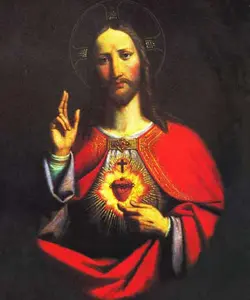 Do we give Jesus lip service or heart service? Let Devotion to the Sacred Heart of Jesus help you focus on His fiery love for you and for all of us!
-
The Twelve Fruits of the Holy Spirit: Part of a Truly Blessed Life!
May 28, 26 08:50 PM
 The 12 Fruits of the Holy Spirit can give you tranquility and equanimity to live by the Spirit so that you may walk by the Spirit!
-
Aspirations (Short Prayers) to the Blessed Virgin Mary
May 13, 26 05:09 PM
 Do you find you have no time for prayer? These short easy-to-remember prayers can help you find time and stay close to the Blessed Virgin Mary and Jesus!